Repair TipsLocal Guides
Why is my flat roof pooling water and leaking in Alhambra
Standing water on your flat roof is not normal. Here is why ponding happens on Alhambra flat roofs, how it turns into leaks, and what repair actually costs in 2026.
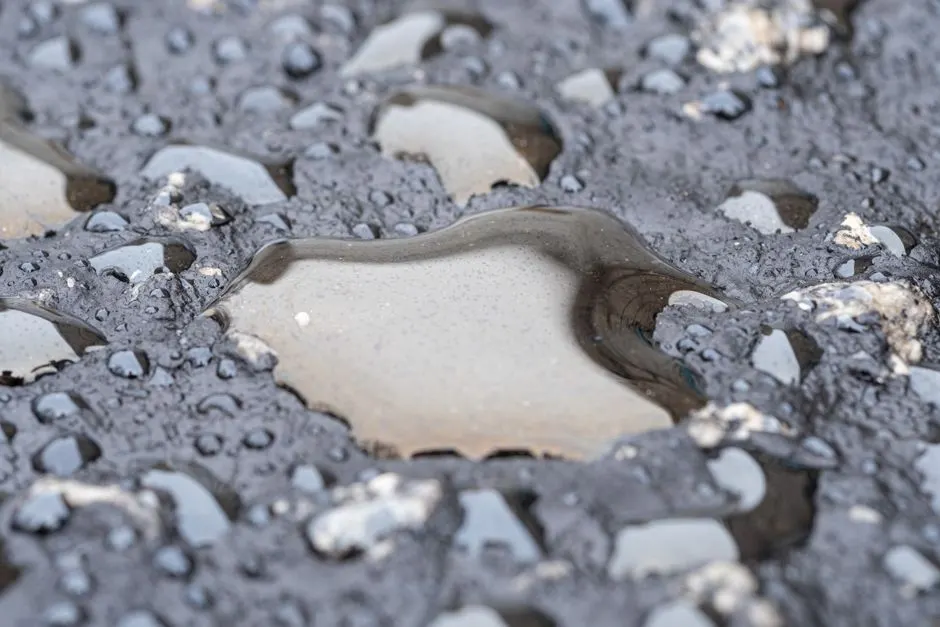
Your flat roof is pooling water because the roof surface no longer drains fast enough - either the slope has flattened out, the drains and scuppers are clogged, or the membrane has sagged into low spots that hold water after every rain. That standing water then finds the weakest seam, flashing, or penetration and leaks into your ceiling. Flat roofs are not actually flat; they are built with a slight pitch, and when that pitch fails, ponding starts. This post covers why ponding happens on Alhambra flat roofs specifically, how we trace the leak, what repairs cost in 2026, and when it is time to stop patching and call us.
Why is my flat roof pooling water in Alhambra?
Flat roof ponding water in Alhambra is water that stays on the roof surface more than 48 hours after rain stops. That 48-hour mark is the industry threshold - anything shorter usually evaporates in our afternoon sun, anything longer is actively working its way into the assembly.
Three things cause it here. First, the roof was built with a low slope to begin with - often 1/4 inch per foot, which is the minimum allowed by code. Second, that slope has been lost over decades of re-coating, patching, and settling. Third, our drainage hardware - internal drains, scuppers, and gutters - clogs with leaves, grit, and the fine dust that blows off the San Gabriel Valley foothills.
The result is predictable: a shallow puddle that never fully dries, sitting on top of a membrane that was never designed to be submerged for weeks at a time.
How Alhambra's climate and building stock make ponding worse
Alhambra sits in a dry-summer Mediterranean climate, which sounds like good news for a roof - until you look at how the rain actually arrives. We get almost all of our moisture between November and March, and it comes in concentrated storms that dump an inch or more in a few hours. That is exactly the load a slow-draining flat roof cannot handle.
Then there is the building stock. A large share of the homes and small commercial buildings in Alhambra were built between the 1920s and the 1960s. Many of those roofs have been re-coated five or six times. Each new layer adds weight, traps moisture underneath, and smooths out the original slope. By the time a roof is 60 years old, a slope that started at 1/4 inch per foot might be closer to 1/8 inch - or effectively zero in the middle of the field.
We see this constantly on the older bungalows and duplexes near Main Street and Garfield Avenue, and on the low commercial roofs along Valley Boulevard. Same story every time: a roof that used to shed water fine now holds it for days. If you own one of these buildings, our Roof Repair in Alhambra, California team can walk the roof and tell you in one visit whether the slope is recoverable or whether you are looking at a re-roof.
The five drainage problems we find most often
Flat roof drainage issues in Alhambra almost always trace back to one of five specific failures. When we inspect, these are what we are looking for.
- Clogged internal drains. The drain bowl fills with leaves and grit, the strainer dome rusts shut, and water backs up across the whole roof. A single clogged drain can pond an entire 1,500-square-foot roof.
- Blocked scuppers. These are the openings at the roof edge that let water spill into a gutter or off the side. A bird's nest, a tennis ball, or a wad of palm fronds is enough to stop one.
- Failed or missing overflow drains. Code requires a secondary drain path in case the primary clogs. On older roofs, that overflow was never installed or has been sealed over during a re-coat.
- Sagging decking. When the plywood or tongue-and-groove deck underneath has absorbed moisture, it sags between joists. The membrane follows the sag and creates a bowl.
- Ponding at penetrations. HVAC curbs, vent pipes, and skylights interrupt the flow of water. If the flashing around them is low or the curb is undersized, water stacks up against the base.
Two or three of these are usually present at once. A clogged drain plus a sagging deck is the classic combination that turns a slow-draining roof into a leaking one.
How ponding water turns into a leak
Standing water does not leak through a healthy membrane. It leaks through the seams, laps, and penetrations that were already marginal - and it makes them worse over time.
Here is the mechanism. Most flat roof membranes are held together by seams, and those seams rely on heat-welded or adhesive bonds. When water sits on a seam for weeks, it works into any tiny gap through capillary action. Once inside, it cannot evaporate. It travels laterally along the deck, which is why the stain on your ceiling is often 10 or 15 feet away from the actual breach.
UV exposure makes it worse. Our summer sun bakes the membrane at surface temperatures that regularly exceed 150°F. That heat expands the membrane, and the cool nights contract it. Do that cycle 300 times a year and any weak seam eventually opens. Add standing water to that seam and you have a leak.
That is also why flat roof leak detection in Alhambra is not a matter of looking at the wet spot on your ceiling and climbing straight up from there. The entry point and the drip point are rarely in the same place.
How we find the leak without tearing up your roof
We start with a full walk of the roof, usually in the morning before the sun has dried the surface. Standing water leaves a visible tide line, and the low spots show up as darker patches even after the puddle is gone.
From there we use three tools depending on what we find:
- Moisture meter scan. We map the wet areas of the deck from above. This tells us how far the water has traveled and whether the damage is localized or spread across the field.
- Infrared imaging. On larger roofs, thermal imaging shows the temperature difference between wet and dry insulation. It is the fastest way to find a hidden breach on a 5,000-square-foot commercial roof without pulling up membrane.
- Flood test. On stubborn leaks, we isolate sections of the roof, flood them with a hose, and watch where water appears inside. Slow, but definitive.
Once we know the entry point, we can usually repair it the same day. If the leak is coming through a specific penetration - a vent, a skylight, a chimney - we handle that with the right trade. Our Flat Roof Leak Repair in Alhambra, California crew does the membrane work, and we coordinate the rest.
What flat roof leak repair costs in Alhambra in 2026
Typical 2026 pricing in Alhambra for flat roof leak repair runs from about $450 to $1,800 for a targeted repair, and $3,500 to $9,500 for a partial re-roof of a 1,000- to 1,500-square-foot flat section. The spread is wide because the work is not the same job at every price point.
Here is how the numbers break down:
- Simple flashing or seam repair: $450-$850. One to two hours on the roof, one crew.
- Drain or scupper clearing and repair: $350-$700. Often combined with a seam repair.
- Localized membrane replacement (up to 100 sq ft): $900-$1,800. Includes removing the failed section, replacing wet insulation, and re-seaming.
- Partial re-roof with tapered insulation to restore slope: $3,500-$9,500. This is the fix when the ponding is caused by a lost slope rather than a single failure.
- Full flat roof replacement: $9,000-$22,000 depending on square footage, membrane type, and how much decking needs to be replaced.
Two things push a job toward the higher end: wet insulation that has to be removed and replaced, and a roof that needs tapered insulation to rebuild the slope. If we can fix the leak without touching the slope, you stay in the low range. If the ponding is structural, you do not - and patching over it just buys you one more rainy season.
We give you the number before we start. No diagnostic fee on the first visit, and no surprise line items after the fact.
Common mistakes that make ponding worse
The wrong fix is often worse than no fix at all, because it hides the problem until the next storm. These are the mistakes we see most often on Alhambra flat roofs.
- Coating over standing water. A reflective coating applied to a wet roof traps moisture underneath. The membrane blisters within a year and the ponding is still there.
- Adding another layer of membrane without fixing the slope. More layers mean more weight and less pitch. The pond gets deeper, not shallower.
- Sealing the overflow drain. We see this on almost every older roof. Someone sealed the secondary drain because it was "letting water in." It was doing its job - now the primary has no backup.
- Patching the ceiling instead of the roof. Painting over a ceiling stain does not stop the water. It just hides the evidence while the deck rots.
- Ignoring small ponds because "it dries eventually." A puddle that lasts 72 hours is already doing damage. A puddle that lasts a week is a leak waiting for the next rain.
If you have already tried one of these and the roof is still ponding, that is not a sign the roof is unfixable. It usually means the underlying drainage issue was never addressed.
When to call a professional
Call us when the pond lasts more than 48 hours after rain, when you see a ceiling stain that grows after each storm, or when the same spot has been patched twice and still leaks. Those three signals mean the problem is in the roof assembly, not in the patch.
Roof Repair Alhambra Pros handles flat roof leak repair, drainage correction, and full flat roof replacement across Alhambra and the surrounding San Gabriel Valley. We walk the roof, find the actual entry point, and give you a fixed price before any work starts. If the fix is small, we will tell you it is small - we are not in the business of selling re-roofs to people who need a $600 seam repair.
For commercial buildings, we also work directly with property managers on scheduled maintenance so a clogged drain never becomes a tenant complaint. Our Commercial Roof Leak Repair in Alhambra, California service covers everything from a single scupper to a full TPO or modified bitumen system.
Frequently Asked Questions
Why is my flat roof pooling water in Alhambra?
Your flat roof is pooling because the slope has flattened, the drains or scuppers are clogged, or the deck has sagged into low spots. Alhambra's concentrated winter storms and older re-coated roofs make all three common. If water sits more than 48 hours after rain, the drainage has failed.
How do I fix flat roof ponding in Alhambra CA?
Clear the drains and scuppers first - that alone fixes many ponds. If water still stands, the slope needs correction with tapered insulation or a partial re-roof. A coating over a wet roof will not work. Expect $450-$1,800 for a targeted repair, more if the slope has to be rebuilt.
Who repairs flat roof leaks near me in Alhambra?
Roof Repair Alhambra Pros repairs flat roof leaks across Alhambra and the San Gabriel Valley. We handle membrane seams, flashing, drains, scuppers, and full flat roof replacement. Call (626) 640-8498 and we will schedule a roof walk, usually within a day or two.
How much does flat roof leak repair cost in Alhambra CA?
In 2026, most flat roof leak repairs in Alhambra run $450 to $1,800. Partial re-roofs with slope correction run $3,500 to $9,500. Full flat roof replacement runs $9,000 to $22,000. Wet insulation and lost slope are the two factors that move a job to the higher end.
Can ponding water damage my flat roof in Alhambra?
Yes. Water that stands more than 48 hours works into seams, rots decking, and adds hundreds of pounds of load per pond. Over a few seasons it turns a $600 seam repair into a $9,000 re-roof. The longer it sits, the more it costs to fix.
Get help with Roof Repair in Alhambra
If your flat roof is holding water after every storm, we can find the cause and fix it before the next rain. Call Roof Repair Alhambra Pros at (626) 640-8498 and we will get a crew on your roof.